Thursday, September 7, 2017

Hidden Figures Day 2

Continue 'Hidden Figures(2016; 126 minutes)

Essential Questions to consider:
-What do the characters in Hidden Figures teach about dealing with adversity?
-How do the characters change during the film?
-In what ways to the main characters catalyze change in others?
-Who or what are the 'hidden figures'?

Read this film synopsis aloud before watching: 

Hidden Figures tells us about a generally unheralded group of women whose brilliance and dedication provided a foundation for the space program—the black women known as “human computers” who worked at the NASA Center in Langley, Virginia. Faced with obstacles to their own education and to job prospects because of race and gender, these women succeeded in earning places and eventually respect in a workplace dominated by male supervisors and colleagues, many of whom were reluctant to hire women, and marked by segregated facilities, from office to restroom, that reflected the pre-civil rights era. Their story is also the story of the world in which they lived and worked—the racism and segregation that made their lives more difficult; the beginnings of the civil rights movement in the South; the Cold War with Russia that gave such impetus to the drive for superiority in space; and the space race itself. 

Skim questions 1-10 on your group's copy of the 'Viewer Response Journal.' Have volunteers read each of the 10 questions out loud. All copies are numbered; please leave on the desks. Just keep these questions in mind as you're watching. We will answer the questions as a table group next class when we finish the film.

Begin film; record each period's end time on board.

Tuesday, September 5, 2017

Climate Guide Day 1; 'Hidden Figures' Day 1

Sub for today: Ms. HK :)

Early dismissal today due to heat and smoke


First 10 minutes of Period 6 and 7...

Period 6
Handout Franklin Climate Guide and PPS Handbook. Have students verify receipt on your class list. (Have students sign)
Main Highlighted Topics - Climate Guide Intro
*Review Table of Contents: Pages 2
*New Bell & A/B Schedule: Front Page Sticker
*Mission & Vision Statement, Climate Guide Purpose: Page 3
*Franklin STRONG – We Believe: Page 4

Period 7
Main Highlighted Topics - Academics
*Academic Information: Page 10
*Add/Drop: Page 10
*Grading System: Page 11 & 12
*PPS Diploma Requirements: Page 13
*Academic Integrity: Page 28

'Hidden Figures' (2016; 126 minutes)

Essential Questions to consider:
-What do the characters in Hidden Figures teach about dealing with adversity?
-How do the characters change during the film?
-In what ways to the main characters catalyze change in others?
-Who or what are the 'hidden figures'?

Read this film synopsis aloud before watching: 

Hidden Figures tells us about a generally unheralded group of women whose brilliance and dedication provided a foundation for the space program—the black women known as “human computers” who worked at the NASA Center in Langley, Virginia. Faced with obstacles to their own education and to job prospects because of race and gender, these women succeeded in earning places and eventually respect in a workplace dominated by male supervisors and colleagues, many of whom were reluctant to hire women, and marked by segregated facilities, from office to restroom, that reflected the pre-civil rights era. Their story is also the story of the world in which they lived and worked—the racism and segregation that made their lives more difficult; the beginnings of the civil rights movement in the South; the Cold War with Russia that gave such impetus to the drive for superiority in space; and the space race itself. 

Skim questions 1-10 on your group's copy of the 'Viewer Response Journal.' Have volunteers read each of the 10 questions out loud. All copies are numbered; please leave on the desks. Just keep these questions in mind as you're watching. We will answer the questions as a table group next class when we finish the film.

Begin film; record each period's end time on board.

Friday, September 1, 2017

2017-18 Day 2; Class Agreements Poster

Grab your name tag on the way in, please!

'Roses & Thorns' with your Four Corners partner from last class


Scedule check in: next Tues/Wed

Look at FHS STRONG Poster together


I want you to have a say in what our agreements LOOK LIKE:


1. In table groups, assign a Materials Manager, a Recorder, a Time Keeper, and a Task Manager.

2. Materials manager: please take one white 


board and a marker back to your table group


3. Write down ideas of what your group thinks each agreement looks like in the classroom. What are you as students doing to

show that you are being thoughtful, respectful, organized, neighborly, & generous? For example: our group feels that listening and not talking during instruction is an example of respect. 

Time Keeper: give your group 5 minutes per Agreement.


4. I will ask each group for their best example of each agreement & I'll put them on a class poster. If another group already used your example choose another idea from your group.


Wednesday, August 30, 2017

2017-2018 Day 1: Welcome!

-WELCOME TO YOUR BRAND NEW 

FRANKLIN HIGH SCHOOL!


-Have a seat where you'd like for today 

(seating chart later)

-You can hang backpacks on the hooks 

on your tables, or at the back of the 

room.


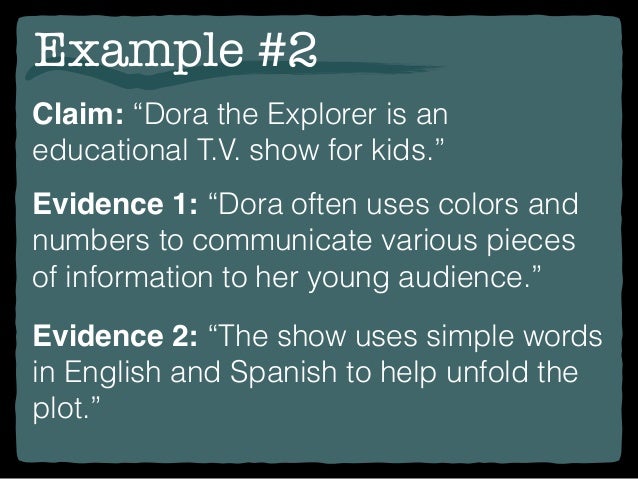
In science, we work to generate a CLAIM. 

These claims can be supported by 

EVIDENCE and REASONING. 


Do a '30 Second Mystery' to practice 

C.E.R...'Austin's Odd Occupation'


-Brief Classroom Norms & Agreements


Agreements are an aspiration or collective vision for how we want to be in relationship with one another. They are developed and enforced by the group, not an authority.
Example Agreements: Speak your truth without blame and judgement. Be fully present to each other and the work. Take responsibility for your actions and words.

Norms are the ways in which we behave.
Example Norms: Don't speak when others are speaking. Honor others' opinions. Be present and listen fully.

-Building Community:


 Four Corners Name Tent Activity

-Please get a writing utensil and a piece 

of paper from the middle table in your 


row

1.Fold paper short end to short end, then 

unfold. Fold ends back in to meet the 

crease.

2. Unfold all the way flat

3. Write your preferred name on inner two 

rectangles BIG

    
(both sides of tent, facing the correct 

direction); decorate!


4. On one side only: 

Upper left corner - Your current favorite 


band/musical artist/artist

Upper right corner - Your favorite science 

class or coolest science fact that you know

Bottom left corner - Something fun you did 

over the summer


Bottom right corner - How you're feeling at 

the moment


5. Pair up with someone you don't already 

know and take turns introducing yourself 

using your name tent, telling them your 

four corner answers

6. Once you've shared with your partner, 

we'll go around the room and you'll be 

responsible for introducing your partner to 

the class, sharing their name and one of 

their corner answers.


Last 10 minutes: check in. What do you 

need?


-I'm so happy you're here and I 

look forward to the year ahead with you! 

Thursday, June 8, 2017

Hi from Ms. Ferro!

Hi Everyone! 
I hope this year treated you well and you're feeling confident going into final exams!
Luca is 5 months old now and getting so big. It's super fun being a mom but very hard work!
I'll be in the building in the next week so maybe I'll see you around. If not, have a wonderful summer and I'll see you in the fall! Take care!
Best,
Ms. Ferro :)

Final Exam study...

Study guides:
Unit 5: Tectonics & Oceans
Unit 6: Aquatic & Marine Ecosystems
Unit 7: Water resources & pollution
Climate Change Packet

Prezis:
Unit 5: Tectonics & Ocean
Unit 6: Aquatic & Marine Ecosystems & Unit 7: Water resources & pollution
Climate Change

Tuesday, May 30, 2017

Last notebook update! Due May 31 & June 1

Notebook Update: Unit 6 & 7

Unit 5: Oceans & Plate Tectonics
p. 1: Divider for Semester #2, be sure you put your last name and period, please!  Thanks! (Feb. 6 & 7)
p. 2 & 3: warm-up & color processing & Eyewitness: Oceans Video handout (half sheet) (Feb. 8 & 9)
p. 4 & 5: Processing:  "Letter to myself about final exams notes and processing. Storyboard of a Current Event.(Feb. 10 & 13)
p. 6 & 7: processing and notes: Convection Cell lab;  INCLUDE: After lab questions
p. 8 & 9: warm-up & color processing; notes about Density & Heat (Feb. 21 & 22)
p. 10 & 11: 3 things you knew + 3 things you learned & color processing; Bill Nye Earth's Crust (Feb. 21 & 22)
p. 12 & 13: Drain the Ocean processing and video notes (Feb. 23 & 24)
p. 14 & 15: processing; Ring of Fire & Cookie Tectonics handout (March 3 & 6)
p. 16 & 17: processing; Convection Cell review (March 7 & 8)
p. 18 & 19: processing; three layer ocean handout (March 9 & 10)
p. 20 & 21: processing; thermo (March 13 &14)
    - Density demonstration (turned in)
    - Ocean currents handout
OPTIONAL: study guide
Unit 6: Marine & Aquatic Ecosystems PREZI LINK
p. 24 & 25: processing & notes (#1-7) Unit 6 (April 3 & 4)
p. 26 & 27: processing & notes (#8-19) Unit 6 (April 5 & 6)
p. 28 & 29: processing & viewing guide questions for Planet Earth: Freshwater  (April 7, 10 &11)
p. 30 & 31: processing & notes (#20-27) Unit 6 (April 12&13)

*** NOTE ABOUT PAGE NUMBERS:  Your notebook should include the complete notes and materials from class. It is more important that your notes be complete and match your table of contents than that they match mine listed here.  Thus, the page numbers here are just suggestions.

*** If I miss anything here, please let me know and I’ll fix the list.

p. 32 & 33: Eutrophication worksheet, Notebook Quiz: Unit 6 answer sheet, Salton Sea article & notes (April 14&17)
p. 34 & 35: processing & notes (#1-7) Unit 7: Water Pollution, Part 1, #1-8  (April 18&19)
p. 36 & 37: processing & notes (#9-16) Unit 7: Water Pollution, Part 2, #9-16  (April 20&21)
p. 38 & 39: processing & notes (#17-31) Unit 7: Water Pollution, Part 3, #17-31  (April 28&May 1)
p. 40 & 41: processing & notes (#32-35) Unit 7: Water Pollution, Part 4, #32-35  (May 2&3)
p. 42 & 43: Perfect Science Adventure instructions; Notebook Quiz: Unit 7 answer sheet (May 4-9)
p. 44 & 45: processing & handouts for Cleaning an Oil Spill Model (May 10&11)
p. 46 & 47: OPTIONAL: study guide Unit 7

p. 48 & 49: processing & handouts for CO2 and global temperature graphs (May 19&22)
p. 50: warm-up from May 24 & 25

Do not include the Global Warming packet.

Tuesday, May 16, 2017

Notebook update: May 16

Notebook Update: Unit 6 & 7

Unit 5: Oceans & Plate Tectonics
p. 1: Divider for Semester #2, be sure you put your last name and period, please!  Thanks! (Feb. 6 & 7)
p. 2 & 3: warm-up & color processing & Eyewitness: Oceans Video handout (half sheet) (Feb. 8 & 9)
p. 4 & 5: Processing:  "Letter to myself about final exams notes and processing. Storyboard of a Current Event.(Feb. 10 & 13)
p. 6 & 7: processing and notes: Convection Cell lab;  INCLUDE: After lab questions
p. 8 & 9: warm-up & color processing; notes about Density & Heat (Feb. 21 & 22)
p. 10 & 11: 3 things you knew + 3 things you learned & color processing; Bill Nye Earth's Crust (Feb. 21 & 22)
p. 12 & 13: Drain the Ocean processing and video notes (Feb. 23 & 24)
p. 14 & 15: processing; Ring of Fire & Cookie Tectonics handout (March 3 & 6)
p. 16 & 17: processing; Convection Cell review (March 7 & 8)
p. 18 & 19: processing; three layer ocean handout (March 9 & 10)
p. 20 & 21: processing; thermo (March 13 &14)
    - Density demonstration (turned in)
    - Ocean currents handout
OPTIONAL: study guide
Unit 6: Marine & Aquatic Ecosystems PREZI LINK
p. 24 & 25: processing & notes (#1-7) Unit 6 (April 3 & 4)
p. 26 & 27: processing & notes (#8-19) Unit 6 (April 5 & 6)
p. 28 & 29: processing & viewing guide questions for Planet Earth: Freshwater  (April 7, 10 &11)
p. 30 & 31: processing & notes (#20-27) Unit 6 (April 12&13)


*** NOTE ABOUT PAGE NUMBERS:  Your notebook should include the complete notes and materials from class. It is more important that your notes be complete and match your table of contents than that they match mine listed here.  Thus, the page numbers here are just suggestions.


*** If I miss anything here, please let me know and I’ll fix the list.


p. 32 & 33: Eutrophication worksheet, Notebook Quiz: Unit 6 answer sheet, Salton Sea article & notes (April 14&17)
p. 34 & 35: processing & notes (#1-7) Unit 7: Water Pollution, Part 1, #1-8  (April 18&19)
p. 36 & 37: processing & notes (#9-16) Unit 7: Water Pollution, Part 2, #9-16  (April 20&21)
p. 38 & 39: processing & notes (#17-31) Unit 7: Water Pollution, Part 3, #17-31  (April 28&May 1)
p. 40 & 41: processing & notes (#32-35) Unit 7: Water Pollution, Part 4, #32-35  (May 2&3)
p. 42 & 43: Perfect Science Adventure instructions; Notebook Quiz: Unit 7 answer sheet (May 4-9)
p. 44 & 45: processing & handouts for Cleaning an Oil Spill Model (May 10&11)
p. 46 & 47: OPTIONAL: study guide Unit 7

p. 48 & 49: processing & handouts for CO2 and global temperature graphs (May 19&22)

Friday, May 5, 2017

Plan the Perfect Science Adventure Assignment

Env. Sci. Name: ___________________________________
Howell-Kubler Pd: ________ Date: ____________________

Plan the Perfect Science Adventure
Purpose: Demonstrate your understanding of environmental factors impacting natural ecosystem function and human activities impacting environments.  Propose a field trip that would investigate a unique location in the world. Choose one of the listed locations, describe it and highlight aspects that would make it a good sight for an environmental science adventure.

Introduction: Ms. Whisnand is planning a weeklong trip to Belize in summer 2018 for Franklin students. You can check out the details here: https://www.explorica.com/my-account/my-tours/tourcenter.aspx?tourCenterCode=Whisnand-3535

Propose a dream field trip location and itinerary for Environmental Science students. We are dreaming big, so give yourself a whole week, two if you need it.

  1. Choose a place: one per person.  No duplicates. You may suggest your own if you like, but you must get it approved by the teacher first.  Sign-up with the teacher. If you use a location that is not approved in advance, you may be asked to start over and/or lose a lot of points.

  1. Research you place. NO WIKIPEDIA! You need to have at least three sources, with complete citations.  Remember, the library has a citation making tool at the library’s website: https://franklintoolbox.wordpress.com/cc/for-everyone/research-tools/ or Google “oslis citation maker”.  
WIKIPEDIA is not allowed!  You need to use sources that are edited before you use them, rather than after.
At least one of your sources should be a government or non-profit group’s site.  Avoid websites aimed at tourist business (only one of these, maximum).
Remember, images get citations too. If you get more than one image from a website, you only have to reference it once.

  1. Include:
    1. Maps
      1. First map showing where the region is on a big scale (where in the world?)
      2. Second map showing region with each site you are planning to visit marked
    2. Climate:  paragraph describing the climate, especially during time of year you plan to visit.
      1. Temperature, rainfall/precipitation, usual seasonal patterns
      2. General advice for travelers regarding clothing and gear to bring
        1. Rain gear?  Hats?  Sunscreen?
        2. Hiking boots?  Cultural or local customs to consider?
    3. Ecosystems of the area.  
      1. Two to four.  For example: Portland area would include temperate rainforests, large rivers and urban landscapes,
      2. Add to your general description of the ecosystems:
        1. Illustrate & describe 4 characteristic plants for each ecosystem (things a visiting student should find). (If you are describing 3 or more ecosystems, you only have to cover 3 plants.)
        2. Illustrate & describe 4 characteristic animals for each ecosystem (things a visiting student should watch out for). (If you are describing 3 or more ecosystems, you only have to cover 3 plants.)
        3. Show a typical foodweb for each of those ecosystems.
    4. Environmental issues: How is this region being affected and changed by human influence?
      1. List at least 1 location for students to investigate local environmental issues.
        1. What is the human activity and impact?
        2. What is being done to address this issue?  
          1. Local groups or government projects?
          2. What are the goals for fixing it?  Is it working?
      2. Include 2 illustrations and captions.
    5. Cultural event or location of regional significance
      1. List at least 1 culturally significant event or location for students to experience.
        1. What is the event and its cultural significance to the area?
        2. What will the students do there?  Will they need special clothing or gear?
      2. Include 2 illustrations and captions.
  2. Present your idea for a perfect science adventure
    1. Google doc or slide show
      1. Include everything listed above.
      2. Complete reference page at the end, properly formatted (use Citation Maker, or equivalent tool).
      3. Neatness, writing, spelling, punctuation, grammar, etc. COUNT!
    2. Share with teacher at ahowell@apps4pps.net
      1. Subject heading: “perfect science adventure, Lastname, Firstname, period x”
      2. DUE May 15.
      3. Worth 50 project points. (Counts roughly like a test in your final course grade.)